Design Methodology: How to gain progress towards more sustainable packaging
Making packaging more sustainable is a continuous process of setting goals, identifying challenges, seeking innovations and assessing progress. This design methodology explains that step-by-step process and organizes a procedure with which meaningful improvements to packaging may be achieved.
This design methodology is intended to align with the system of measurement outlined by the Global Protocol for Packaging Sustainability (GPPS). The GPPS should be used to understand how to measure attributes and indicators, while this design strategies should be used to gain improvements to the measurements of those attributes and indicators. The GPPS may be accessed here.
Assess the improvements
The design strategies are intended to guide changes in certain attributes of the packaging system, such as the percentage of recycled content used, the cube efficiency of the system, or the amount of material used. These attributes can often be measured directly, but a full LCA or a simplified LCA tool needs to be used to understand how changes in packaging attributes affect changes in impacts.
It is also important to assess the benefits of the new design and compare them to the benefits of other designs under consideration. Unless a very comprehensive functional unit was used, it’s likely that LCA results will not give information to compare the benefits of different design options. Furthermore, cost considerations, unwanted social impacts, and certain environmental indicators may not be included in LCA results. Try to think as holistically as possible when evaluating different design options.
If reductions to the prioritized impacts have been achieved and the benefits of the packaging system have been maintained or enhanced, then you have successfully designed more sustainable packaging!
Example
Prioritize:
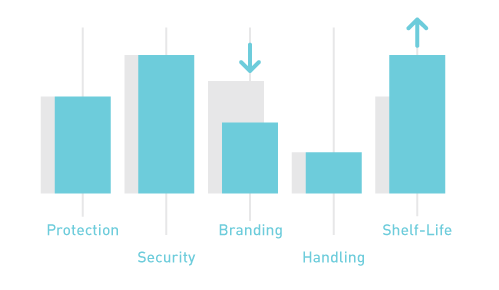
Benefits to maximize
- product protection
- tamper-evidence
- brand reinforcement
- facilitation of handling
- product shelf life
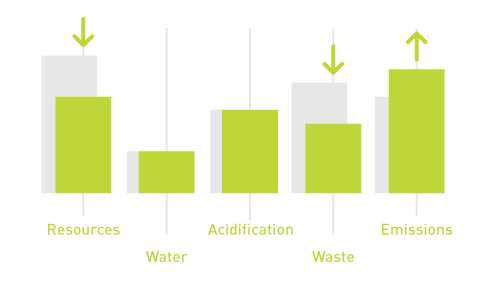
Impacts to minimize
- resource depletion
- water consumption
- acidifcation potential
- solid waste generation
- greenhouse gas emissions
Benchmark
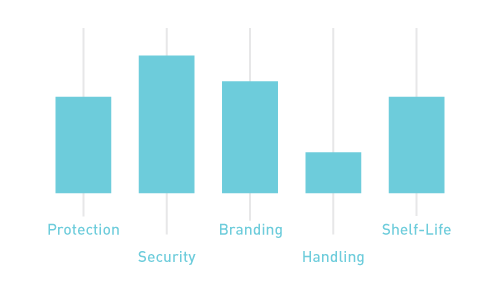
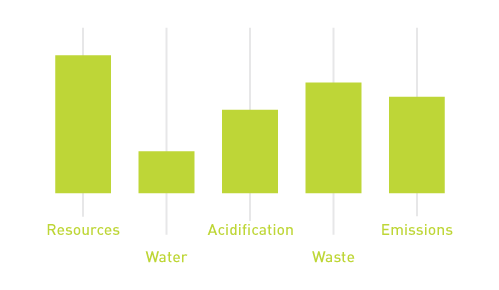
design improvements
Design using responsibly sourced materials:
- amount of PCR in bottles increased
- corrugated supplier in closer proximity chosen
Design for efficient material usage:
- slimmer profile closure chosen
- cube efficiency of bottle design increased
Design for recovery:
- opaque bottle label removed to facilitate optical sorting
- more preferable ink used on corrugated cartons
Assessment