Sustainability + Innovation
Creating optimized packaging systems that contribute positively to our wellbeing with less impacts
Contributing to Our Wellbeing
Adding value, protecting products, increasing shelf life, promoting brands, providing an enjoyable consumer experience
Reducing Impacts
Minimizing resource depletion, reducing pollution, avoiding waste, protecting the health of people and communities
Using Life Cycle Thinking
Because the stakeholders that benefit from packaging are everywhere, but impacts can occur anywhere.
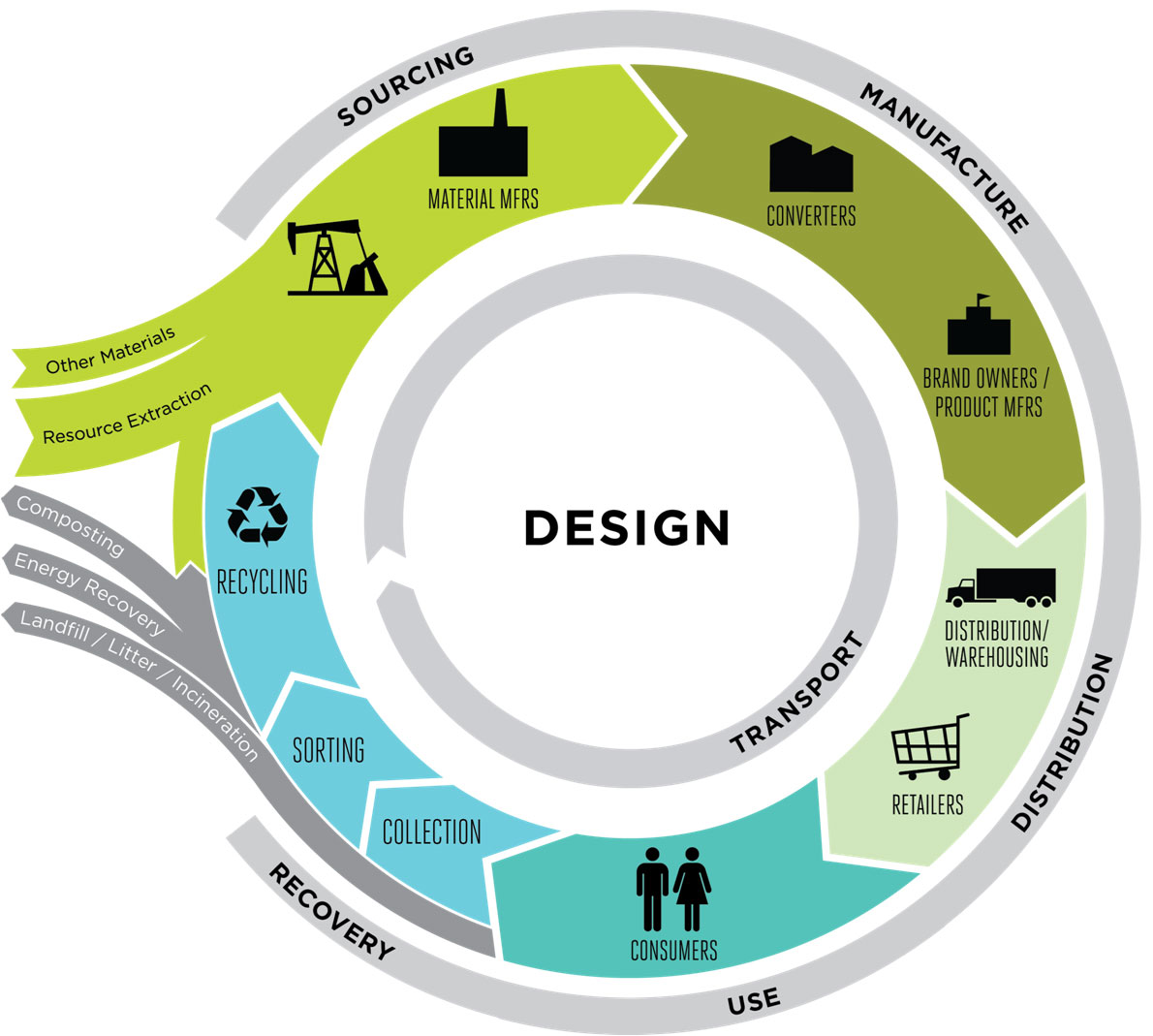
A life cycle approach includes a holistic view of the benefits and impacts of a packaging system – from raw materials sourcing through end-of-life. Life cycle thinking ensures that design improvements addressing one phase of the life cycle don’t cause unintended trade-offs to other life cycle phases.
Viewing the Product-Package System
Because products require packaging systems, and the design of packaging systems is centered on products.
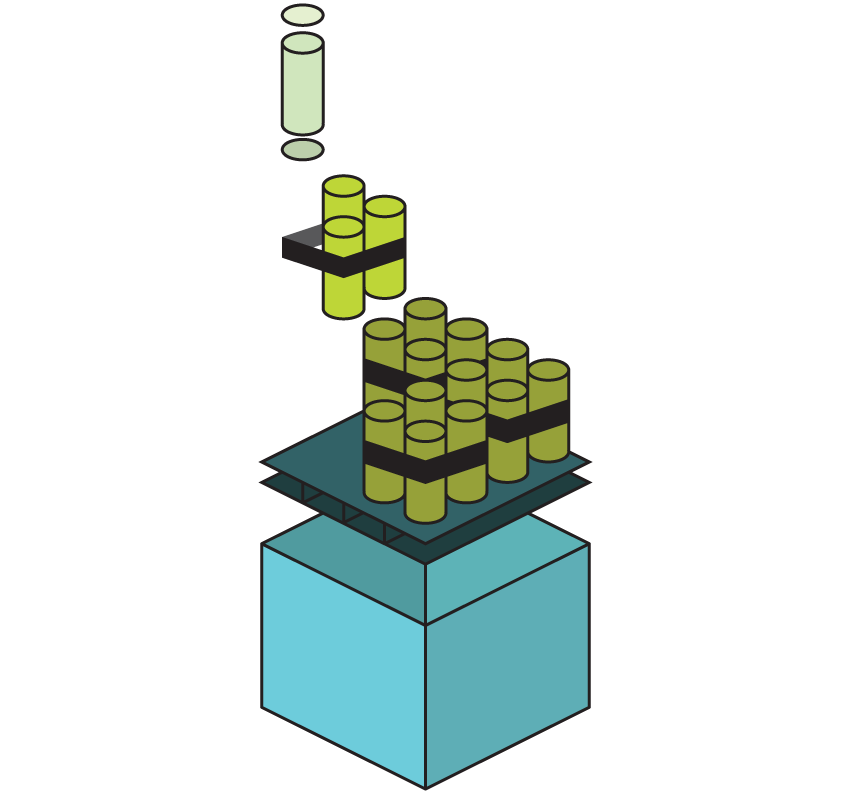
The goal of designing more sustainable packages is to enable a more sustainable delivery of products, and it’s important to recognize that products are delivered by packaging systems, not individual packages. Improving package designs in the context of the full product-package system ensures that design improvements addressing one package in the system don’t cause unintended trade-offs to the product or other packages in the system.
Understanding the full set of benefits and impacts
Because packaging does so much, and opportunities exist to improve so much more.
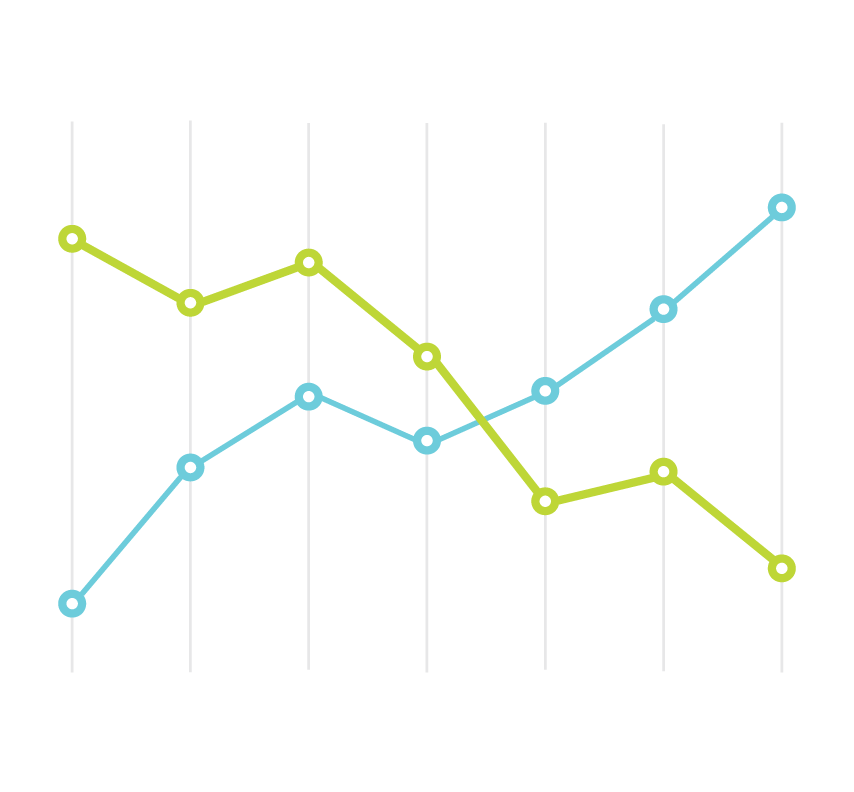
The benefits of packaging are numerous, and so are the impacts. There is little consensus on the relative importance of each impact and benefit, but they all must be understood and taken into account so that design improvements addressing one impact or benefit don’t cause unintended trade-offs to other impacts or benefits of the packaging system.
Developed By: